Anders and Frida Lindqvist
New Build
/
2024
The Brief
The site sits above the treeline on a south-facing slope, exposed on three sides and sheltered on the fourth by a rock formation that has been there longer than the valley below it. The Lindqvists found it through a contact who owned land nearby. They had been looking for two years before they saw it and knew within an afternoon.
The family uses the house as a base. That word — base — shaped everything. Storage for skis, boots, climbing equipment, and outdoor gear had to be built into the structure from the beginning, not added later. The house had to be fully functional within an hour of arriving, and simple enough to leave without preparation. Every room was sized around use, not appearance.
Thermal performance was a primary specification from the first conversation. The house needed to hold heat reliably at altitude, with or without the stove running, and without requiring active management every time the family arrived after a week away.

The Constraints
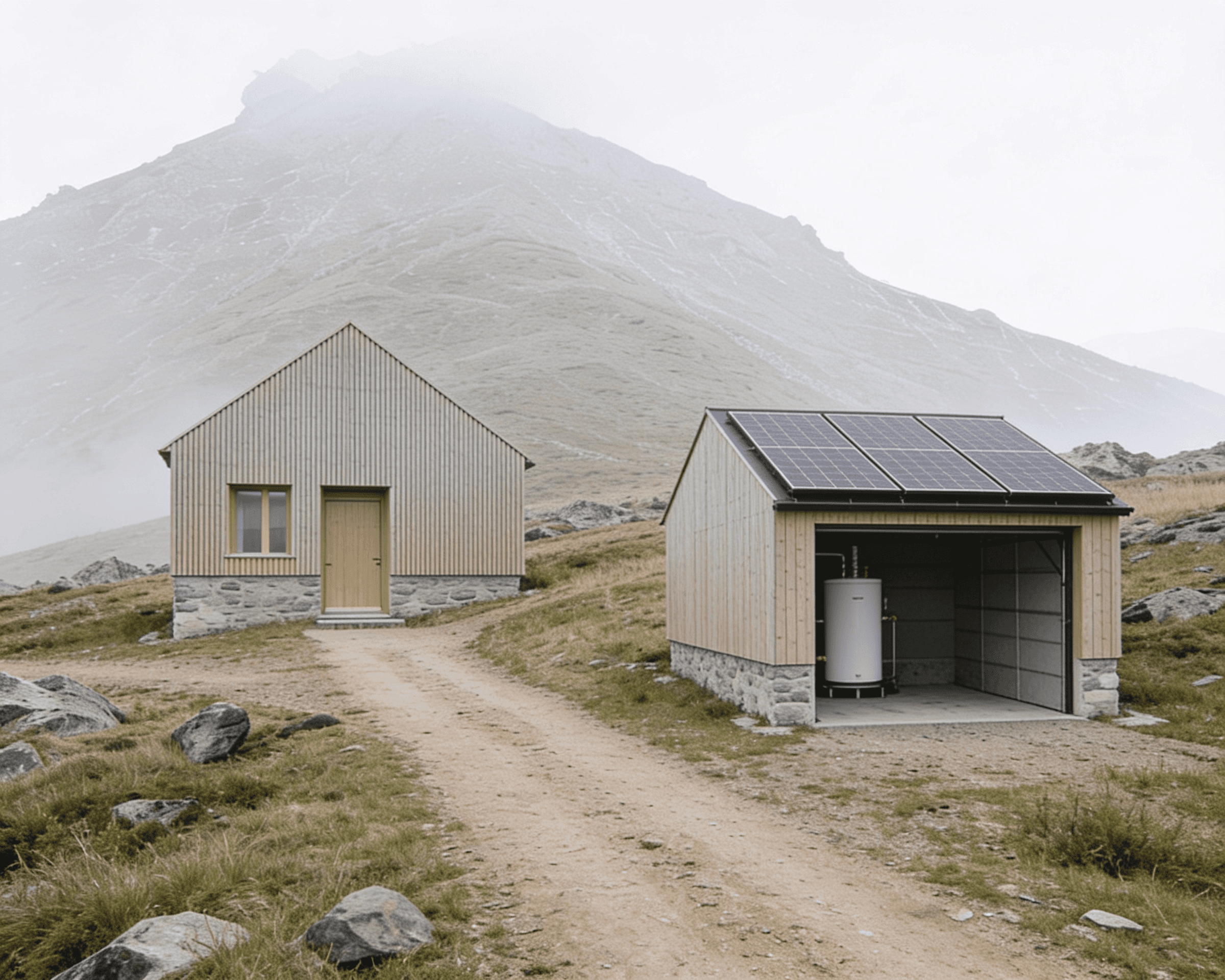
The site is beautiful and unforgiving. Wind loads on an exposed alpine slope are significant, and the planning context — a protected landscape with strict guidance on form, material, and scale — left limited room for formal experimentation. The building had to feel considered without drawing attention to itself. The vertical timber cladding was the right answer for both reasons: it is legible as Norwegian vernacular and it weathers in a way that makes the building look like it belongs to the hillside rather than sitting on top of it.
The site itself set the rest. Foundation work on rock at this elevation is slow and expensive, so the building footprint was fixed early and never grew. Every room had to earn its place inside that footprint before drawings went further. There was no scope, here, for a room that was merely nice to have.
Access is seasonal. Materials, labour, and the family's own visits all depend on a track that closes under snow for parts of the year. The build programme had to work backwards from that closure, not around it.
The Approach

The cladding is the building's main weather strategy, not its finish. A ventilated timber rainscreen sits clear of the structural wall, allowing moisture to escape rather than collect, which matters more here than almost anywhere — the slope holds snow against the building for months at a time. The timber will silver over the coming years. That was specified, not left to chance.
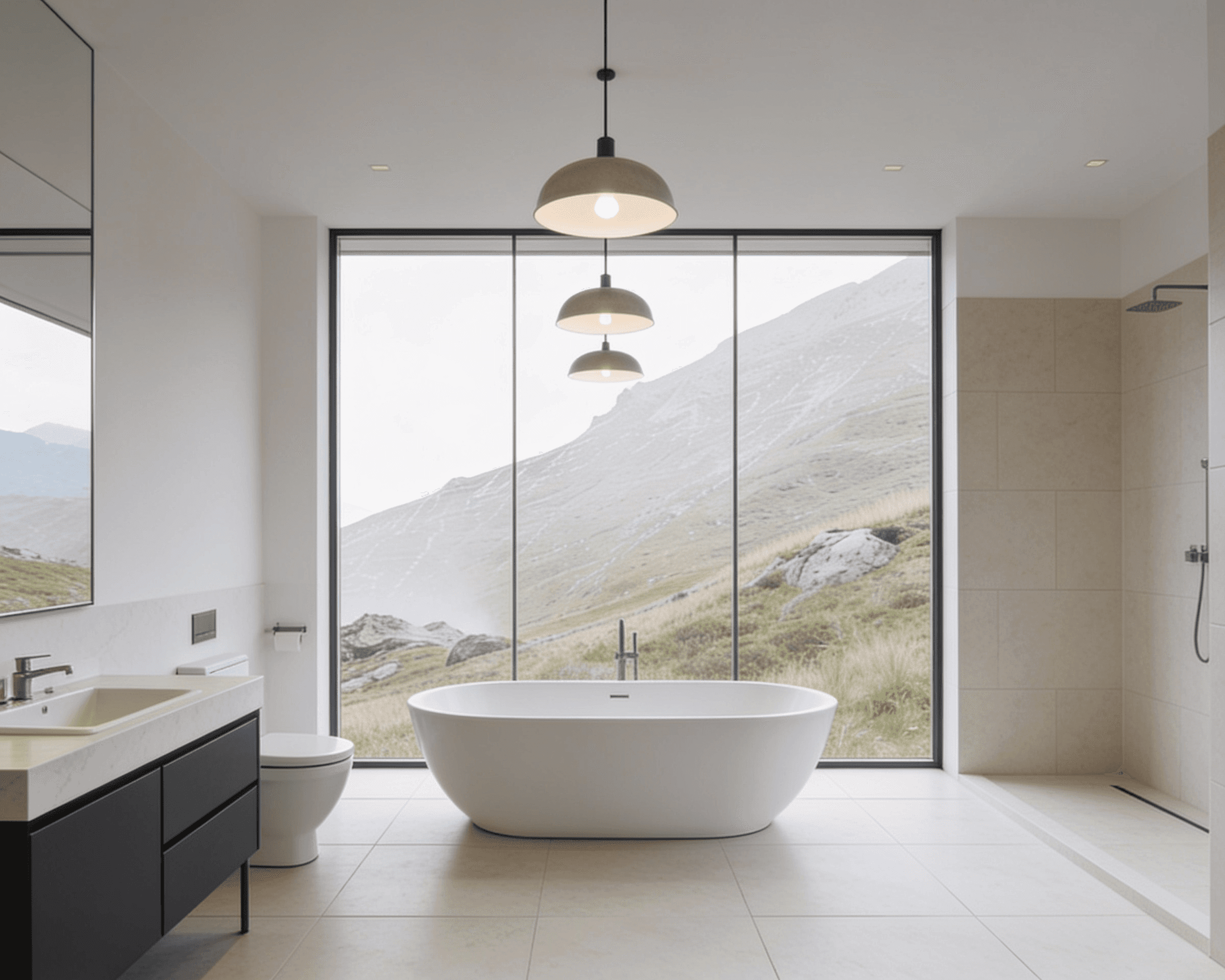
Glazing is concentrated on the south face, sized to bring in winter sun without overheating the main room in July, when the sun barely sets. Everywhere else, openings are smaller and deliberate — framing specific views of the rock formation and the valley rather than offering glass for its own sake.
The plan is a single storey, organised along one axis: arrival and storage at one end, the kitchen and living space at the centre, bedrooms at the sheltered end. Nothing is arranged for show. Everything is arranged for sequence — how a family moves through the building with wet boots and tired children at the end of a day on the mountain.
The Work

The entrance is the most engineered part of the house, and the least photographed. Skis, boots, and climbing gear have their own enclosed space immediately inside the door, separated from the main rooms by a single change of floor finish — heated stone giving way to timber. Wet gear dries here without ever needing to pass further into the building.
The stove sits on a structural hearth poured as part of the foundation, not added afterward, allowing it to carry the thermal mass the heating strategy depends on. Ductwork and services were routed before the timber frame went up, so nothing required cutting into finished surfaces later.
Every junction between the rainscreen cladding and the window openings was detailed to shed water outward, given how long snow sits against the building each year. None of this is visible in the finished house. All of it is why the finished house works.


The Outcome
The Lindqvist house took fourteen months from first site visit to handover. It is not a large building — deliberately so. Every square metre is used, and the rooms that matter most are the ones the brief asked for: a generous kitchen and living space that faces the valley, four bedrooms that are quiet and warm, and an entrance that functions as the operational heart of the house.
What the building does well is what the family needed it to do. It is warm in January when the temperature drops below minus fifteen. It is cool in July when the sun stays up past ten. It opens up when the family is all there and holds its heat when they are not.
"We've had the house for two years and we still talk about how right it feels. The children ask to go every weekend. In summer, in winter — it doesn't matter. It works the same way every time. We didn't know a building could do that."
Anders and Frida Lindqvist
More Projects
Solberg
New Build
2022

The Solberg cabin had been in the family for twenty years before it became a home. What had worked as a weekend retreat — low ceilings, divided rooms, a kitchen that faced the wrong direction — stopped working the moment it became the place they lived. The brief was not to build something new. It was to make what existed function at a different level. To take a building that had been good enough for two days at a time and make it good enough for every day.
Erik and Tone Haugen
Renovation
2022

Erik and Tone Haugen run a restaurant. Erik is the head chef. Tone keeps everything moving. The flat is where the next dish gets tested before it reaches a paying table — and where they host, rest, and start again. The brief was precise: a kitchen built for real work, a home built around it, and nothing that got in the way of either.